
Yoga Props is secure way to develop muscles strength, flexibility and balance. Numerous yoga asanas are effectual in building and restoring vitality, body harmony and keep the person young. According to American researchers, yoga is based on person’s own individual flexibility and level. Injuries in doing yoga practice are unusual.
Still, people suffer aches and pains in yoga practice and it results in acute injury due to poor alignment. In human body, joints are the places where two or more bones connect, help people to bend, turn and swing their limbs, torso and head. Joints also known as articulations are formed where the surfaces of two or more bones meet and articulate with each other. It also enables to do yoga conveniently, and they can be benefitted from the right yoga moves.
At the same time, joints are also susceptible to wounds therefore it is imperative to know how yoga can help to heal and avert injury to joints. Yoga gurus always emphasize the importance of warm-ups before working for any joint in a forceful or gentle pose. Yoga professional advices that pupils or practitioners must make low-intensity weight-bearing poses to strengthen the surrounding muscles of a weak or injured joint. Adopting proper technique in yoga stretching poses will shield joints and strengthen them against musculoskeletal injury or ailment.
The Importance of Using Yoga Props for Joint Safety
It is essential to use effective tips during asana practice to help ensure joint safety in yoga. Practitioners must encourage pupils to use props to avoid knee pain from deep flexion or pressure. There are range of props available like yoga blocks, belts, cushions, mats, suits, gloves, socks, bolsters where support will allow yoga students to assume a pose without placing stress on the joint area. Props are vital tools to support the body so that practitioners can engage in poses that would otherwise be more difficult. This type of yoga may be beneficial to treat joint pains while practicing different yoga poses.
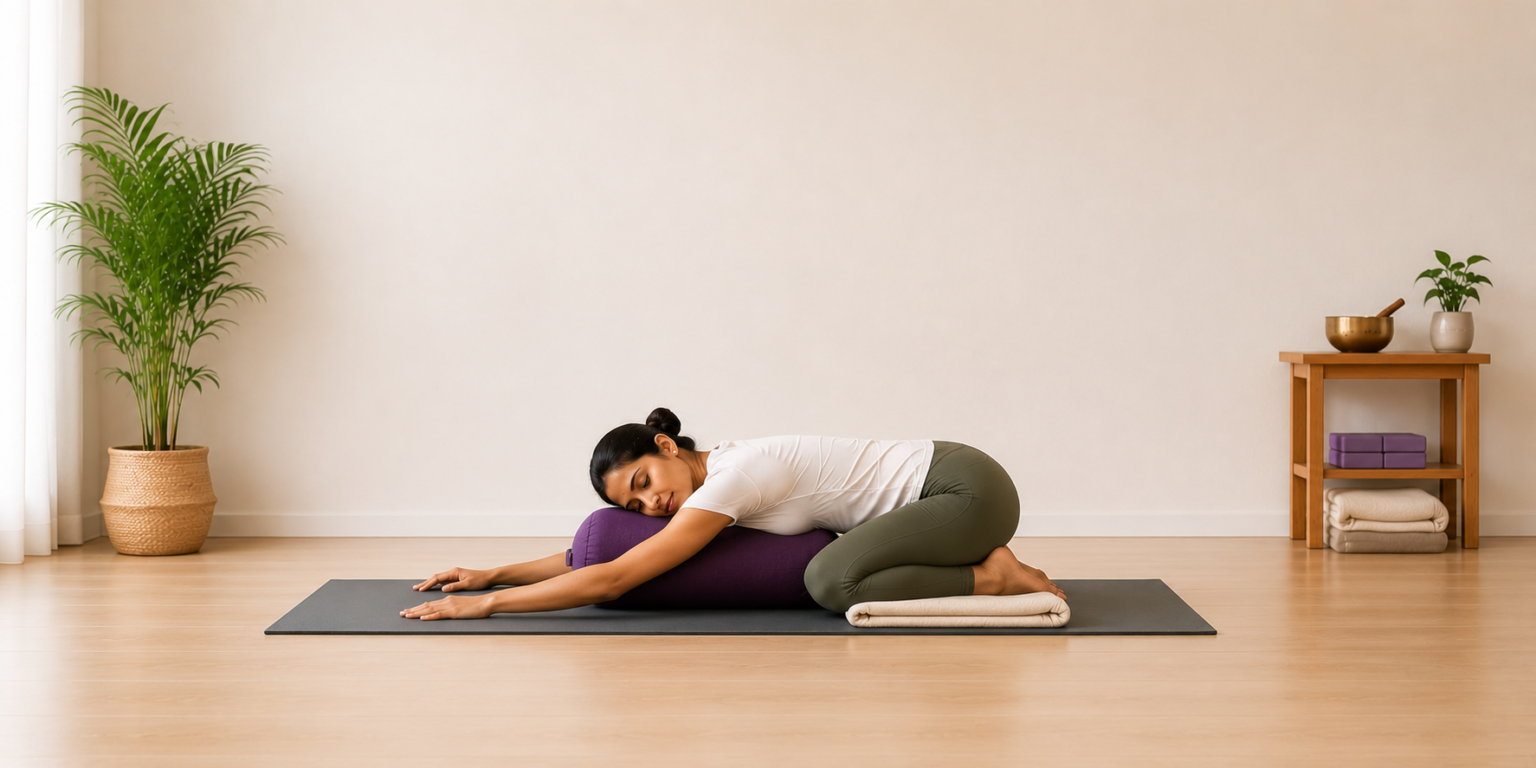
Yoga teacher advices that if practitioners experience pain when their knees are bent deeply, they can use a props to reduce the severity of the knee angle. In Virasana or Hero Pose, sit on a block between heels, and in Balasana (Child’s Pose), roll a blanket and place it behind the knees. If kneeling puts too much pressure on the kneecap (like in Tabletop or Anjaneyasana), practitioners can use a blanket to soften the surface.
As yoga asanas become prevalent among world populace, there are number of yoga props available in the market.
The Yoga Block
Yoga blocks are a wonderful mechanism to make challenging poses. It enables pupils make difficult postures. These are brick-shaped instruments that improve alignment while practicing yoga. Blocks have several uses and because of their shape, they can be placed on different sides to create three different heights. They can also be loaded on top of each other, used side by side, one under each foot, one under each hand, etc. Basically, the block brings the ground a little closer to yoga practitioner which makes poses more manageable.
props It can be explained through example. If hands of yoga practitioner does not quite meet the ground in Triangle Pose or Wide Legged Forward Fold, he/she can place blocks on the ground and then place his/her hands on the blocks. Yoga students might start with the blocks at a higher level, and then rotate them so that they are lower to the ground, allowing them to expand the stretch without having to go all the way to the ground. Blocks can be placed on the ground as a guide for placement or equilibrium. These blocks can also be used on body such as between the knees in chair pose, or between the palms in reverse prayer pose.
When practitioners pick a yoga block, they must keep in mind the size, material, cost, and number. An ideal size for a yoga block is 9 x 4.5 x 3 inches. Originally, wood yoga blocks were made but now people can find blocks in foam and cork also. Foam yoga blocks are light and can take in more pressure without getting damaged. Cork yoga blocks are eco-friendly. According to expert, blocks can be highly beneficial for both the beginner and seasoned yogi in yoga practice. For beginners, yoga blocks can be used when the flexibility is not quite there such as in pose, trikonasana. For experienced yogis, it will help in revolved triangle pose.
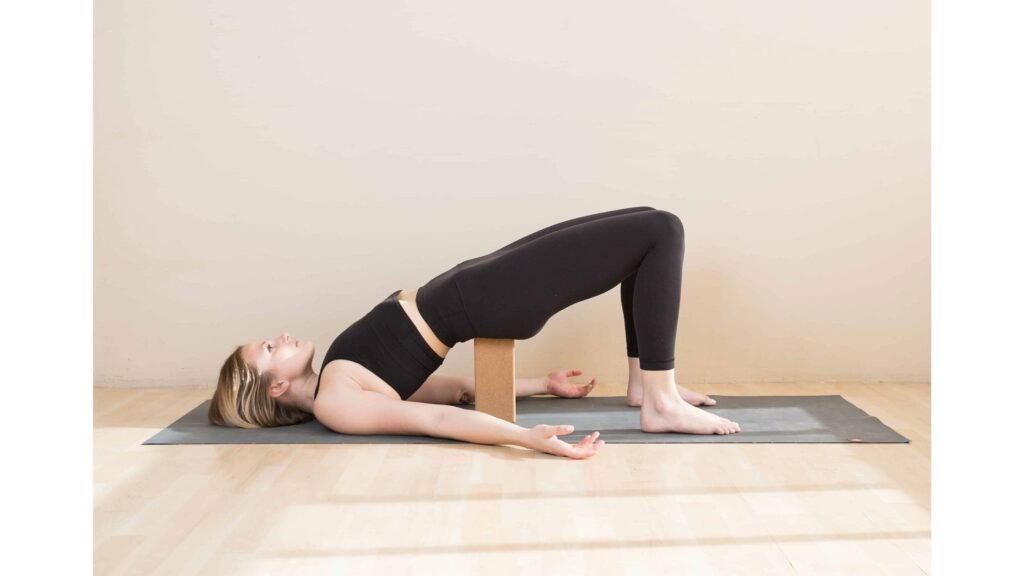
Yoga blocks can also be used by practitioners in pigeon pose as it will help when hip or knee flexibility is not there or if the hip rotation or knee rotation is not available. In bridge pose, a block will encourage the inner thighs to draw toward one another. People who have tight groins can also use blocks in seated poses such as baddha konasana. In this pose, the blocks support the knees so the weight of the legs does not pull too hard on the inner thighs. In brief, yoga blocks are used for practicing yoga asanas to develop extra strength.
Yoga Knee Pad
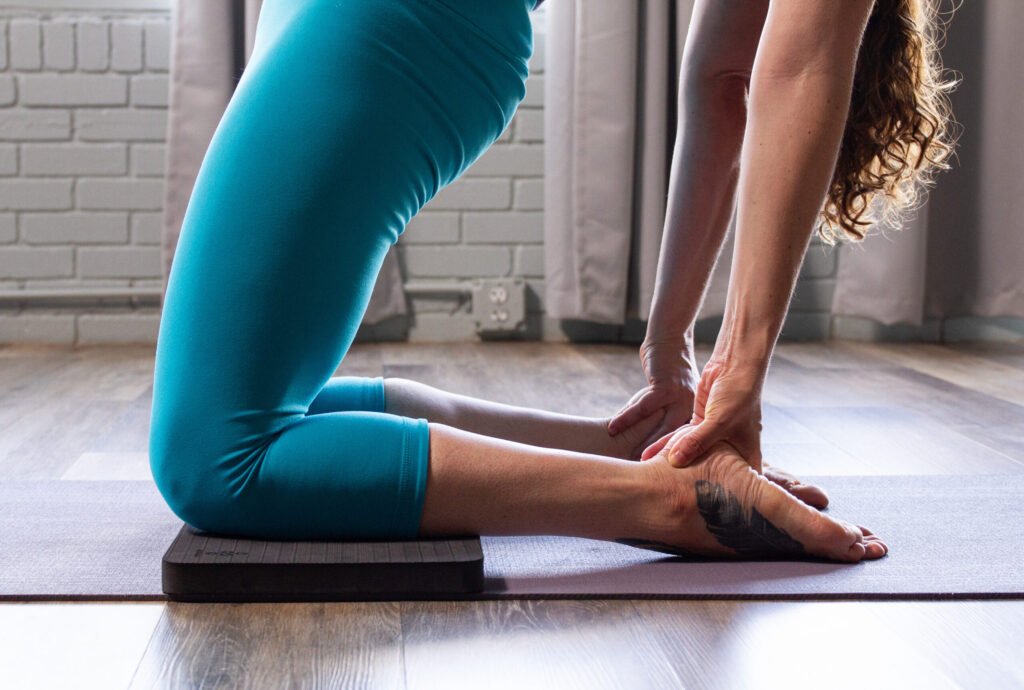
This yoga prop is made specifically to lessen pressure on the knees and other weight-bearing joints during yoga practice. At 15mm thick, it makes an excellent addition to yoga mat so practitioners can practice in comfortable manner. props The Knee Pad is 24”x10” which is good size for various poses. Yoga knee pads are undeniably necessary if person have any joint or muscle pain.
Yoga strap
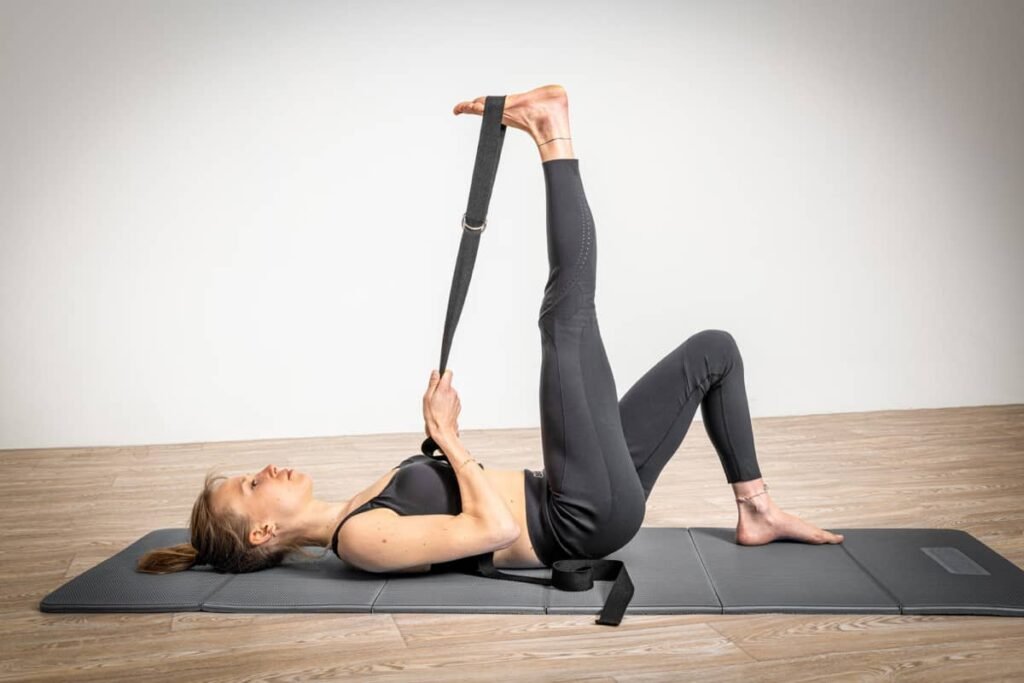
Another useful prop for yoga practice is yoga straps. There are superb tool when beginners or seasoned yoga practitioners are experiencing tightness but want leverage to go deeper into the stretch. In case when pupils are generally able to touch their toes in a forward fold, but experience tightness, a strap can be used to pull them closer to their feet. Straps can also be covered around the body or limbs to provide stability. Practitioners can wrap the strap around their arms when learning inversions such as Pincha Mayurasana.
In place of the traditional strap with adjustable buckles, the YogaSphere is a closed circle design, and comes in small, medium, large, and extra-large so people have a sphere for any pose. Yoga Spheres help with safety, proper alignment, and make challenging poses more reachable. These straps can be helpful in stretching the arms, shoulders, and the sides of human body. props This is a potent way to open the shoulders and make sure the movement stays comfortable.
Yoga Straps may be made either from nylon or cotton. They let people to hold your limbs that they might not be able to reach or grasp in a pose. They also help people to hold a pose longer. It can be said that yoga strap is effective way to get self-help in yoga practice.
Hula Hoop
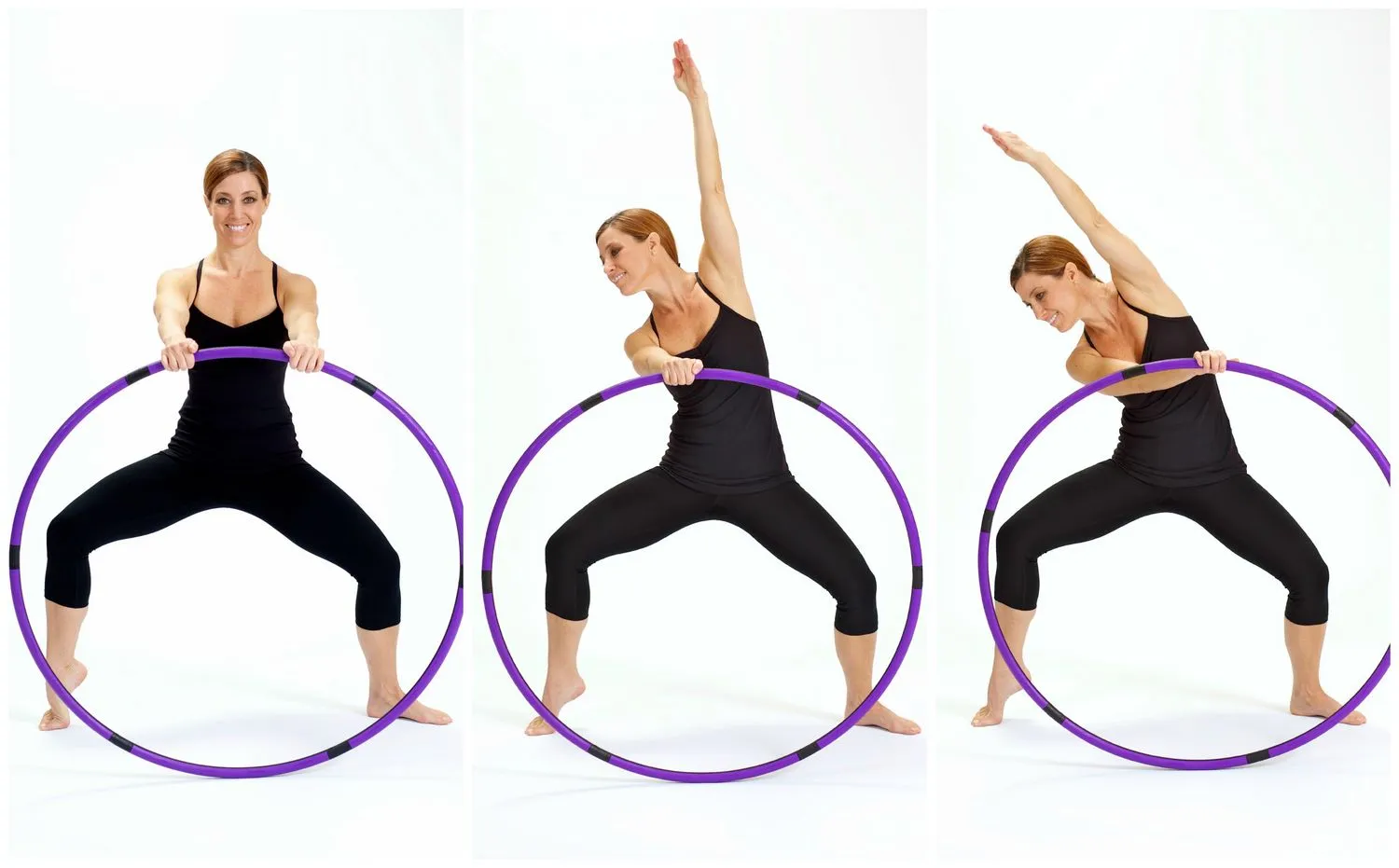
The hoop is an exclusive yoga prop. Practitioners can use in the hands as a tool to support range of motion in the limbs and spine. This prop can be used as a balance mechanism and as a stretch assist supporting deeper lengthening in traditional yoga postures. When hula hooping on the body, the hoop massages the core, and with focused attention and pranayama.
Yoga practitioners can build a purifying heat that with the massage the hoop provides. props It also helps to promote organ health. Additionally, the low weight yet circular design of the hoop, when held in the hands, can be used to build tone and strength. The rhythmic, oscillatory nature of hooping helps mobilize joints, especially spinal joints. It is a complete core workout for people.
Bhoga
In yogic philosophy, bhoga is used in yoga asana for the physical benefits and enjoyment. It is an extension of body’s natural shape and contours. This aids in providing more accurate alignment, and the sides are rounded and open, giving person various ways to use the block.
The Wrist Wedges
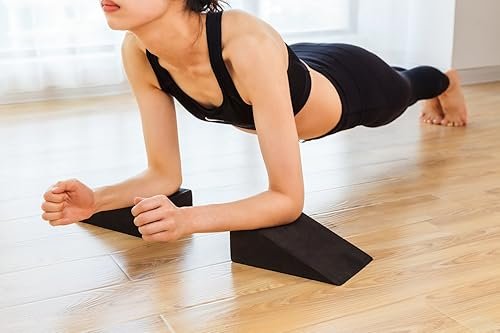
These props are used to provide support and relief for any exercise that puts weight on the wrists. The wedge is a simple, ergonomic design that angles the heel of hand to take the pressure and weight off the wrist. This angle shifts the distribution of body weight, so pupils can practice that Plank pose, Down Dog, or arm balance without pain. It is made from lightweight foam. The foam wedge, which is soft and scratch proof, has a tapered edge for better gripping and adjustable support.
Sometimes, Beginners are unable to complete exercises because of lacking flexibility and poor pose posture can negatively affect their yoga practice and may lead to injuries. Yoga coaches stress the importance of performing the pose correctly, and wedges can be used for safeguarding good form. props Many yoga practitioners use the wedge to support their posture during standing poses, by tucking it under their heels during wall twists.
It can also be inserted under the heels to provide a little bit of lift for those who struggle to perform squats. In simple words, yoga wedge can be used to alleviate joint pain for those who work on computers all day such as carpal tunnel syndrome can cause wrist pain. The wedge, utilized in this manner, can provide stability to the pose and relieve some of the strain placed on joints like the wrist.
Bolster
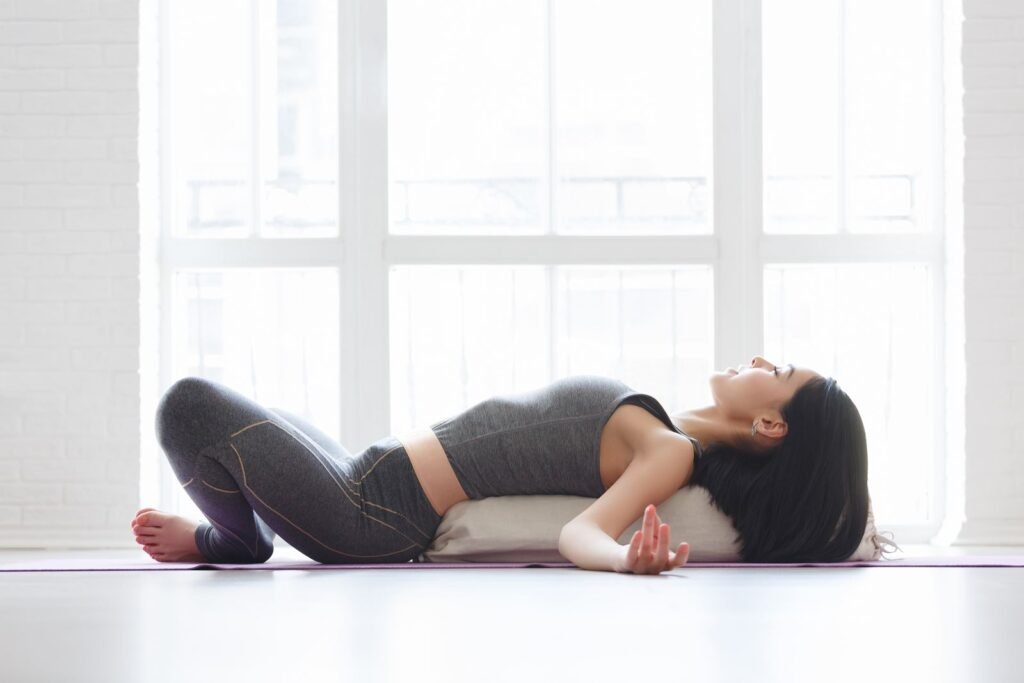
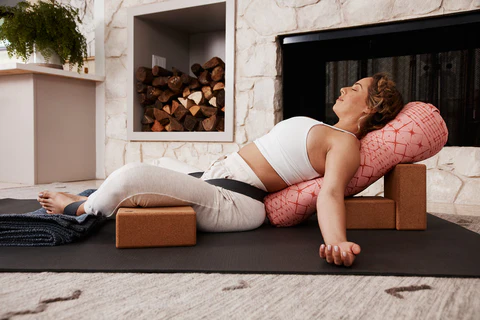
For doing Yoga practice more comfortably and get its benefits, practitioners may use some supporting equipment like bolster. A yoga bolster is a type of prop which resembles a cushion and can be used for body support. It is highly beneficial for trainees and also benefits to those who would like do difficult poses. Basically a bolster is a rectangular or cylindrical cushion, and available in different sizes.
Bolsters are helpful in, joint pain, or in any type of injury. If practitioners like to hold postures for long period of time but sometimes begin to experience discomfort, bolsters can help support body weight to make them more comfortable. props There are numerous benefits for using bolster as a prop. This provides support to body, enhance body posture, relieve stress, and reduces swelling.
Yoga Wheel
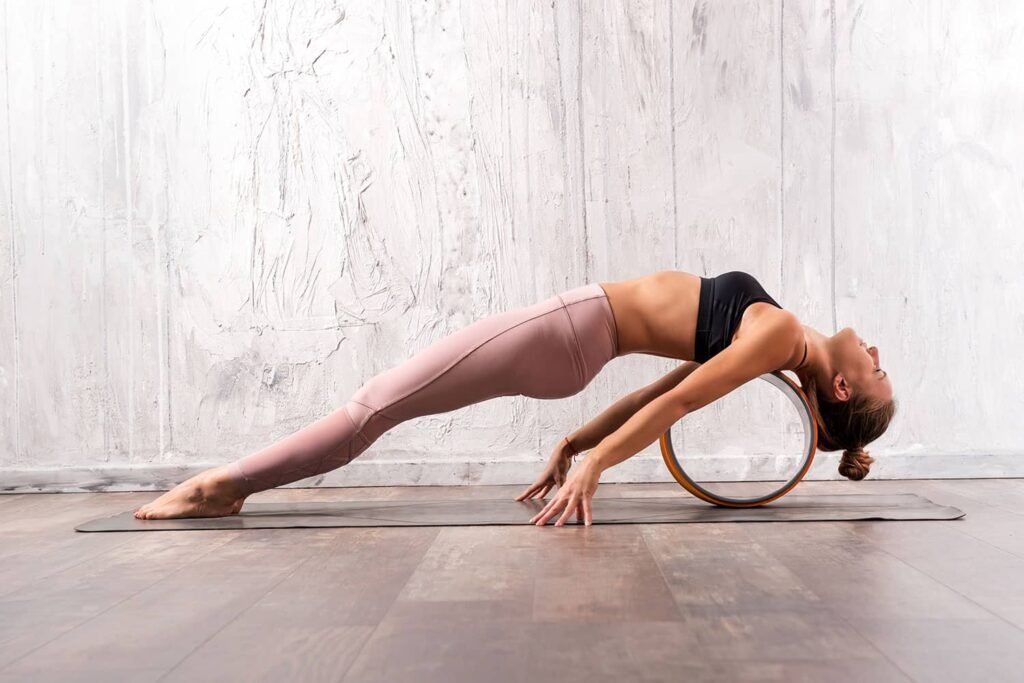
Yoga wheels are more popular these days as a prop. The wheel is very useful for experienced yogis who want to make challenging poses. For example, standing on top of the wheel adds an additional balance challenge. Conversely, the wheel is beneficial for those who have never done yoga before. props It is recommended for an inexperienced yogi to learn a few simple movements on the wheel so that they can get a great stretch through the neck, shoulders, chest, rib cage, upper back and lower back. The wheel has to be robust enough to provide structure and to support the full weight of the practitioner.
To wrap up, yoga practice is vibrant, and always progressing. Practitioners can experience the physical and mental strength by regular yoga practice. props Pupils or beginners must take advice from yoga teachers for proper alignment of body during yoga to avoid joint pain. Yoga instructors are highly recommended to use various props in yoga practice to shield the joints. Yoga props are supportive tools in yoga practice. Yoga props give strength and stability instead of promoting more flexibility. It is advised to practice yoga to increase bone and muscle strength by firming the muscles that support joints.