
The ultimate source of energy
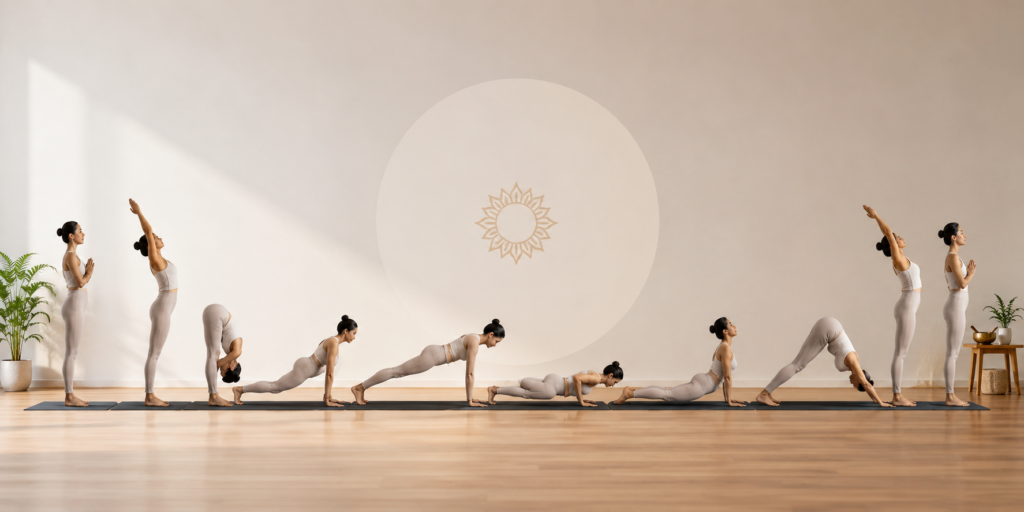
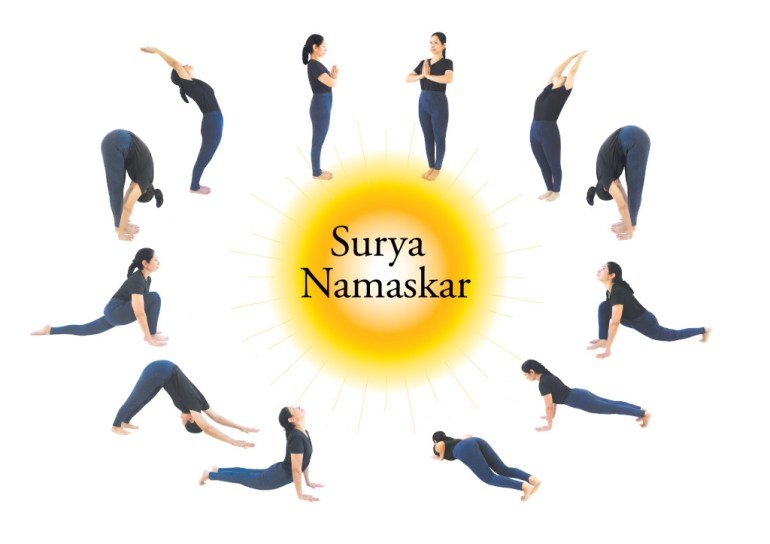
Sūrya Namaskār is derived from the two Sanskrit words Surya means ”Sun” and Namaskar means “Salutation”. It is a sequence of 12 powerful yoga poses. It is considered a great cardiovascular practice and proven to have an immensely positive impact on the body and mind.
The sun is the closest star to Earth. It radiates light and heat, or solar energy, which makes it possible for life to exist on Earth. Plants need sunlight to grow. Animals, including humans, need plants for food and the oxygen they produce. Without heat from the sun, Earth would freeze. There would be no winds, ocean currents, or clouds to transport water. Solar energy has existed as long as the sun—about 5 billion years. While people have not been around that long, they have been using solar energy in a variety of ways for thousands of years.
By performing sun salutation practitioners can increase the heat within which is directly and indirectly related to the health, metabolism process and emotional level. Surya Namaskar is the ultimate practice which work wonder on human body. This asana has immense power which can build up the whole personality.
Sun Salutation is a series of asanas designed to access the ethereal energy that exists all around us. Our body is equipped with the inborn intelligence to receive energy from the sun directly. Surya Namaskar The mind, through the solar plexus and the body, through physical movement get a boost from the practice of Sun Salutation. Therefore, it is a complete practice for mind and body.
How to do the Asana?
Overview & Steps
The best time to do Surya Namaskar is early in the morning at sunrise on an empty stomach. Each round of Sun Salutation consists of two sets, and each set is composed of 12 yoga poses. Surya Namaskar provides good health, also gives us an opportunity to express gratitude to the sun for sustaining life on this planet.
Step 1: Pranam Asana (Prayer Pose)
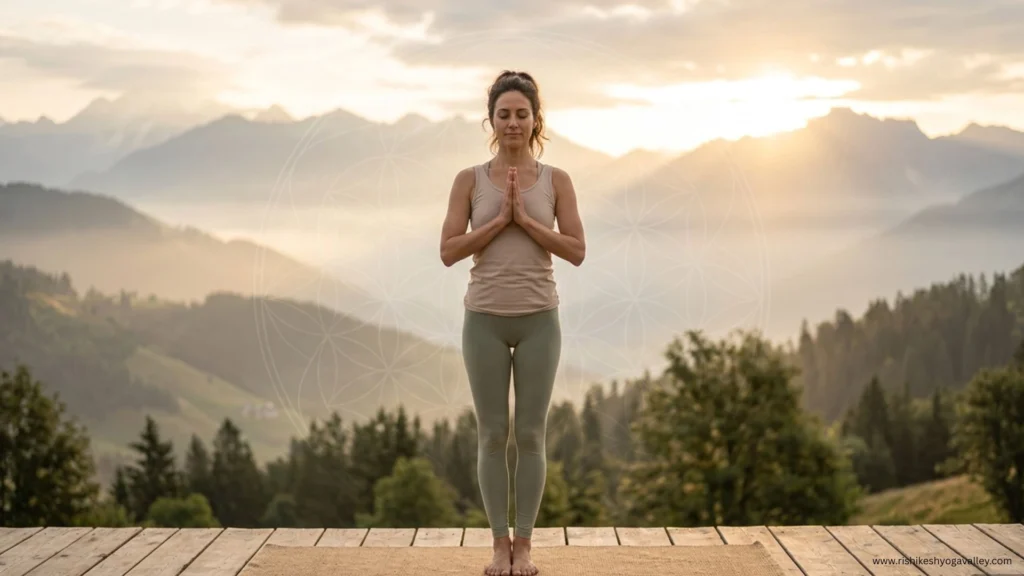
Start the Surya Namaskar by keeping the feet close to each other. Distribute body weight evenly. Keep the chest and shoulders relaxed and expanded. Place the hands together in the “namaste” position in front of the chest. Breath normally.
Step 2: Hasta Uttanasana (Raised Arms Pose)
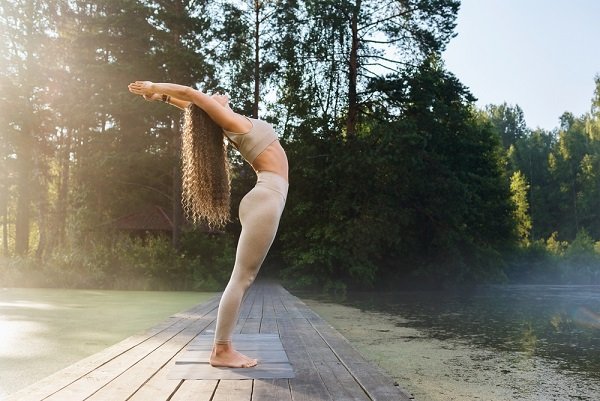
Inhale and raise your arms up while forming a curve towards the back with the biceps slightly touching the ears. Surya Namaskar You should be able to experience a stretch throughout the entire body as your arms make an effort to touch the sky. The feet should be grounded while performing it.
Step 3: Padahastasana (Standing Forward Bend)
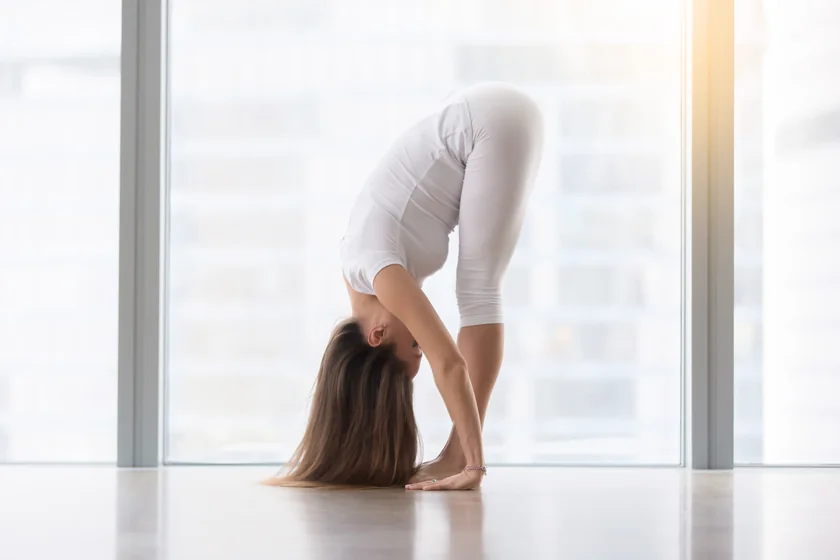
Exhale and bend forward from the hp joint, keeping the spine straight. Keep your legs upright, knees lightly bent. Reach down and grab the ankles with respective hands.
Step 4: Ashwa Sanchalanasana (Equestrian Pose)
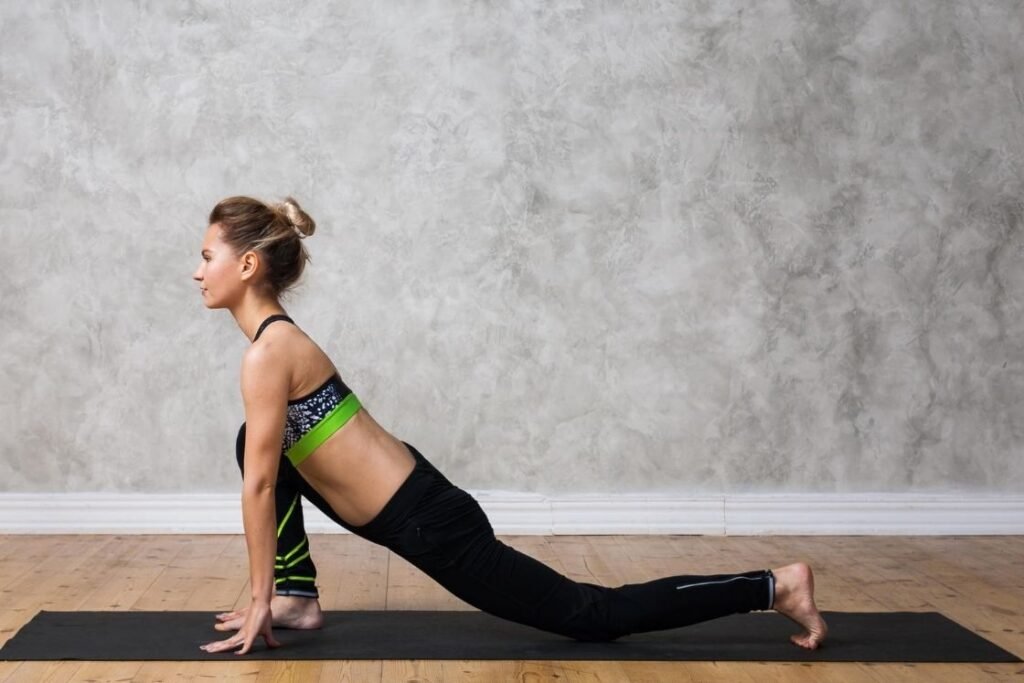
Inhale and push the right leg backwards to touch the edge of the mat and look up the roof. Bend the left leg as the knee is at perpendicular angle to the ground. The left leg should be exactly in the middle of the two palms.
Step 5: Parvatasana (Mountain Pose)
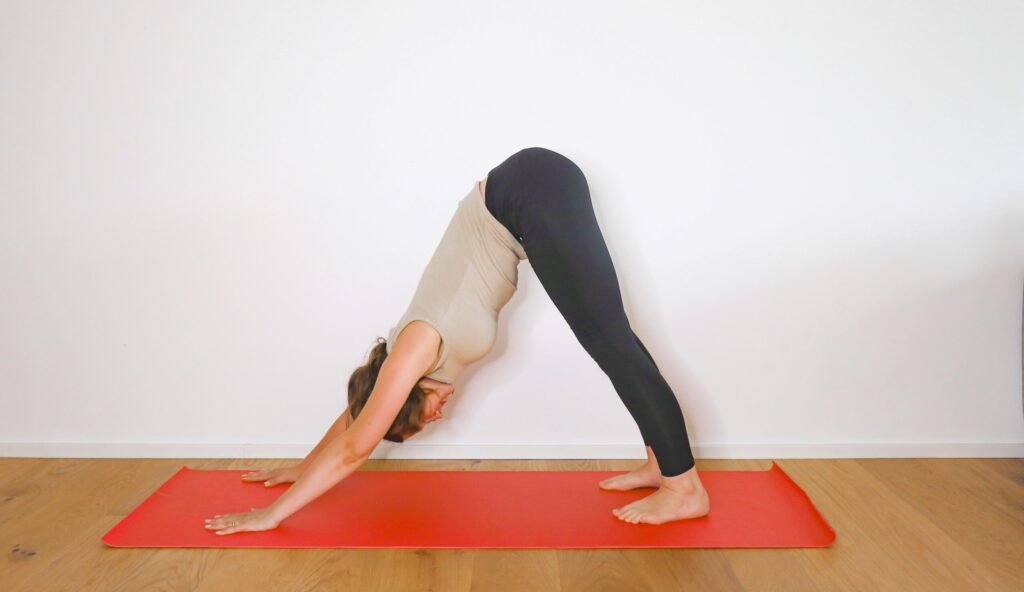
Now inhale, push the other leg back and bring both the feet together while lifting the rear end upwards in an inverted “v” position. Balance the body weight between palms and the feet and, then, exhale. Make sure that the sole is well palnted on the floor and heels are not lifted up.
Step 6: Ashtang Namaskar (Salute with Eight Parts or Points Pose)
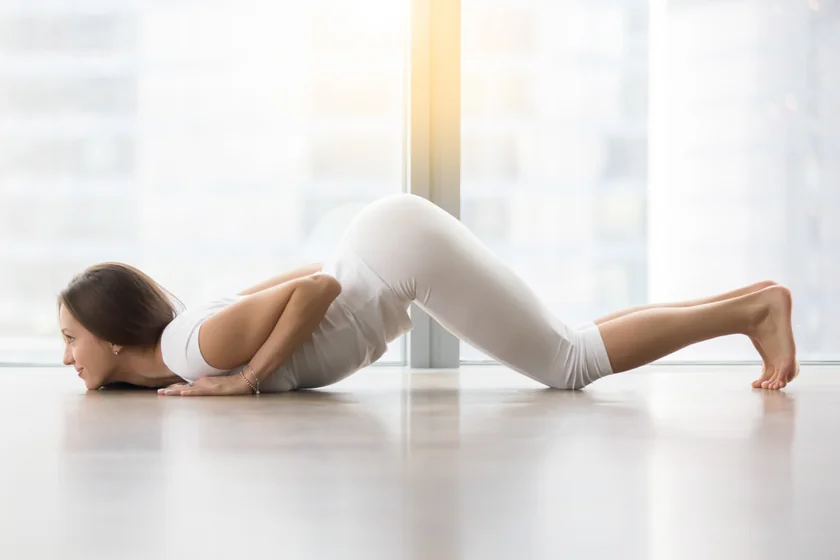
By retaining the breath out, rest the chin and knees on the floor. The two hands, two feet, two knees, chest and chin (eight parts/points of the body) should touch the floor. Raise the buttock upwards and exhale.
Step 7: Bhujangasana (Cobra Pose)
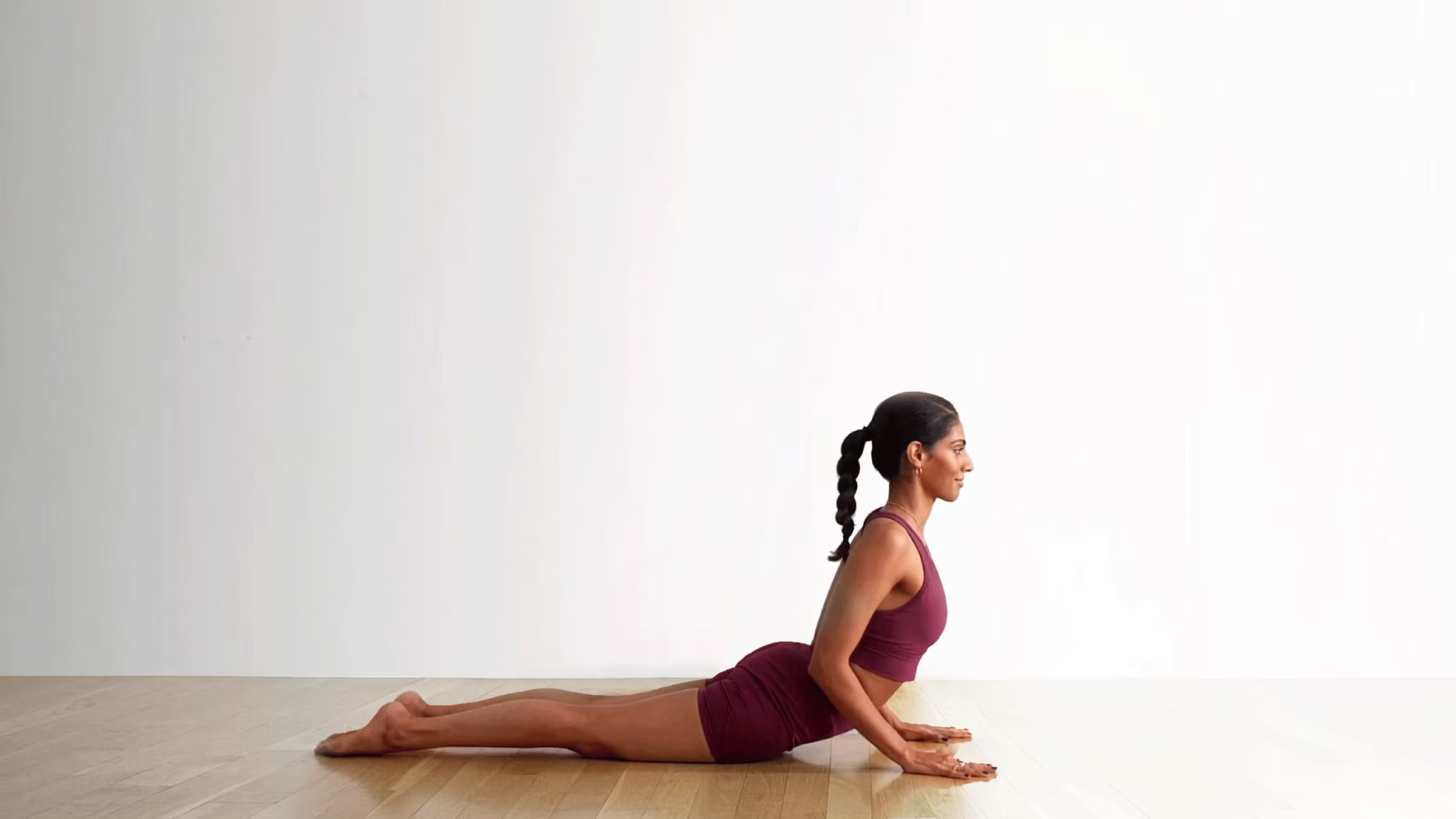
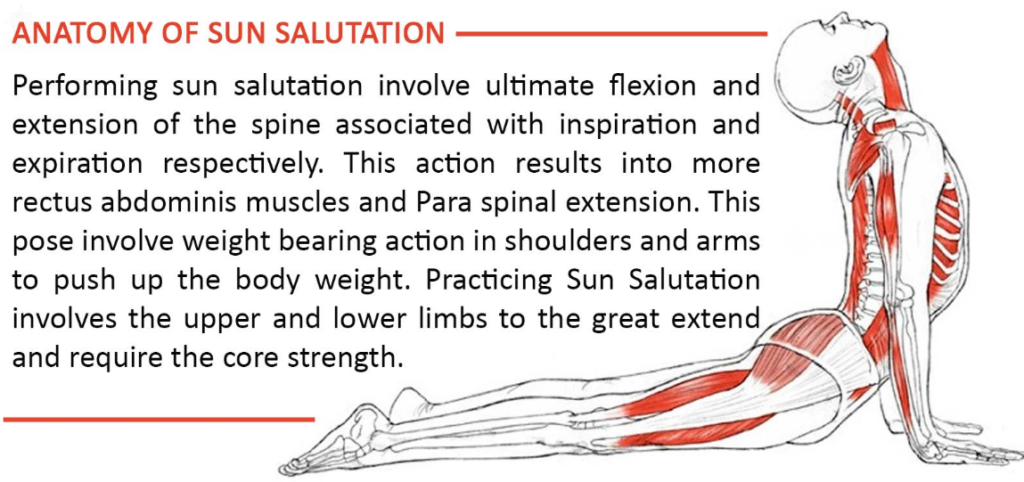
Inhale and gently rest the body on the floor by moving forward. Now raise the torso upwards from the waistline till the navel point. Keep the shoulders relaxed and elbows bent. Exhale while you look up in the raised position.
Step 8: Parvatasana (Mountain Pose)
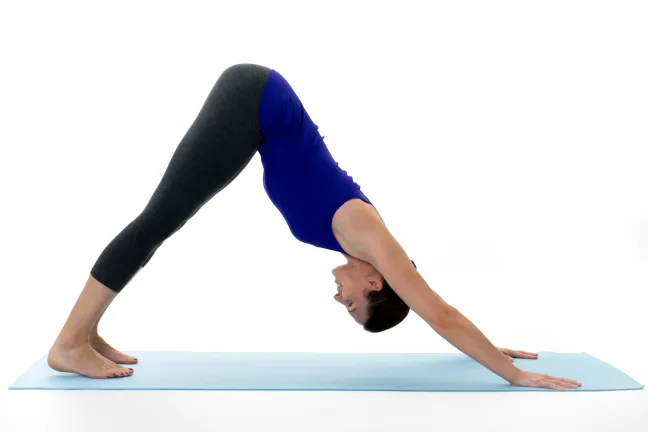
Now exhale, bring both the feet together pushed back while lifting the buttocks upwards in an inverted “v” position. Balance the body weight between palms and the feet and, then, exhale.
Step 9: Ashwa Sanchalanasana (Equestrian Pose)
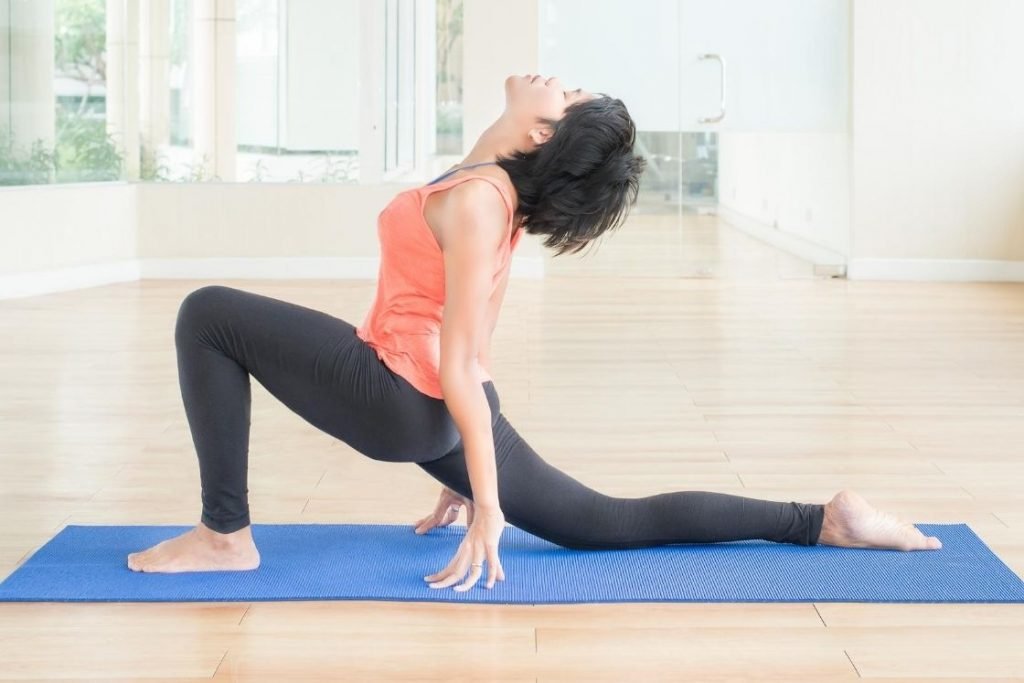
Inhale and push the right leg backwards to touch the edge of the mat and bring the right knee to the ground. Bend the left leg as the knee is at perpendicular angle to the ground. The left leg should be exactly in the middle of the two palms. Then, look up and exhale.
Step 10: Padahastasana (Standing Forward Bend)
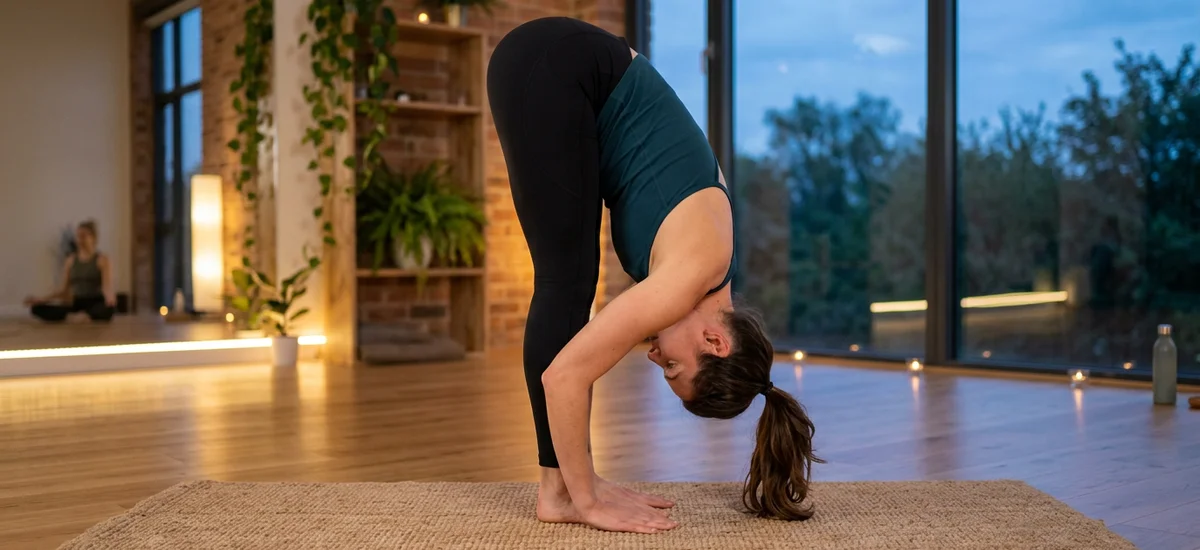
Exhale and bend forward from the hip joint keeping the spine straight. Keep your legs upright, knees lightly bent. Reach down and grab the ankles with respective hands.
Step 11: Hasta Uttanasana (Raised Arms Pose)
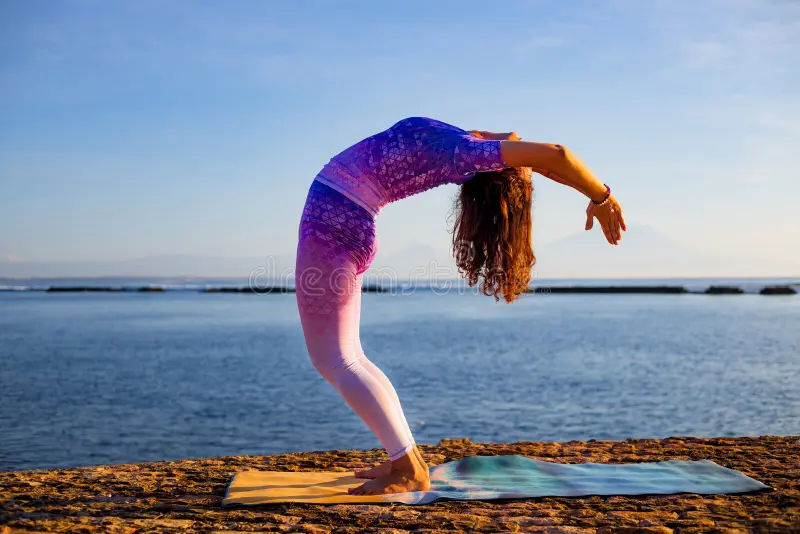
As you inhale, lift your arms up while forming a curve towards the back with the biceps slightly touching the ears. You should be able to experience a stretch throughout the entire body as your arms make an effort to touch the sky. The feet should be grounded while performing it.
Step 12: Pranam Asana (Prayer Pose)
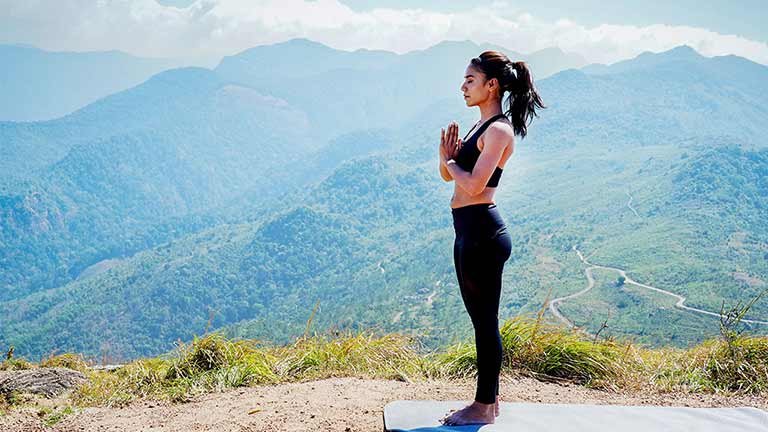
Finish the series of Surya Namaskar by coming back to the position of standing on your feet close to each other. Distribute body weight evenly. Keep the chest and shoulders relaxed and expanded. Place the hands together in the “Namaskar” position in front of the chest.
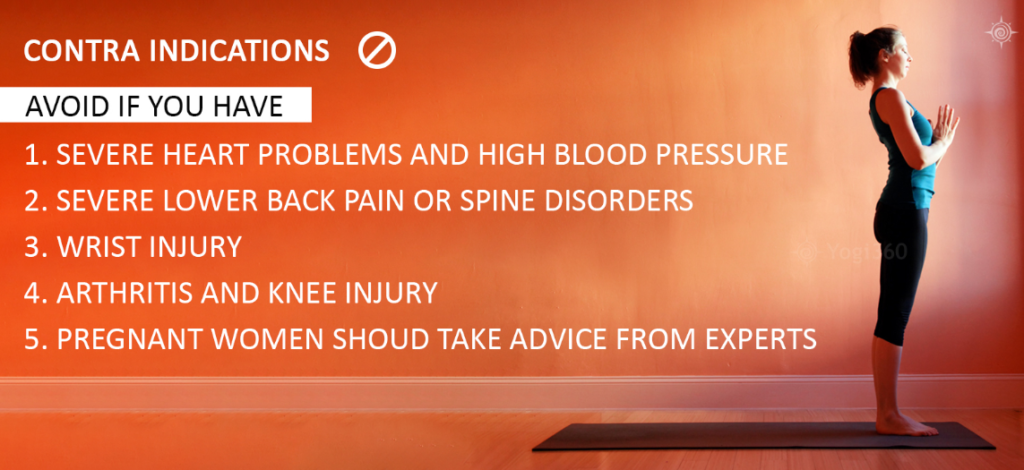
SAFETY & PRECAUTION TO PREVENT INJURIES
- Make sure that the sun salutation practice is done on empty stomach or at least after 4-5 hours meals time.
- The practitioner is required to be aware of his/her breath, so that the asanas and the breathing remain in synchrony.
- After completing series of sun salutation, rest in Savasana.
PROCESS OF MEDITATION IN SUN SALUTATION
While performing Surya Namaskar, practitioners can visualize a form of sun in each pose. One of the purposes of doing sun salutation practice is to achieve the good health by paying our gratitude to the sun that selflessly showers its energy and power on the earth continuously. Surya Namaskar Practitioners should mentally visualize and feel the sun’s rays and feel the power and energy of it. Feel the warmth of it while visualizing. See yourself immerging with the power of sun which is the Source of all life forms. This will help you in the process of meditation.
PREPARATORY AND FOLLOW UP POSES
Preparatory Poses:
-Joints & Glands Practices
Follow-up Poses:
-Savasana
- Seating or kneeling Poses
KEY ALIGNMENT OF ASANA
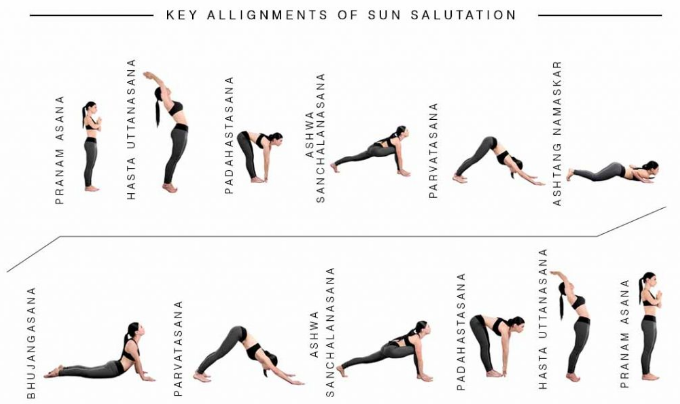
IMPORTANCE OF BREATHING IN SURYA NAMASKAR
The breath is an important part of this series of asana as Sun Salutation is a group of 12 asana. Transition from one pose to the next is always done in rhythm with either inhalation or exhalation of the breath. All 12 poses are having different actions on chest region and has effect on respiration process. Surya Namaskar When practitioners are inhaling, at this point lungs are opening up and diaphragm is extending, as result more oxygen are acquired in. Dynamic nature of the sun salutation will required more oxygen in order to perform the higher number of time. Surya NamaskarFocusing on breath on each pose gives flexibility and strength to perform the pose at ease.
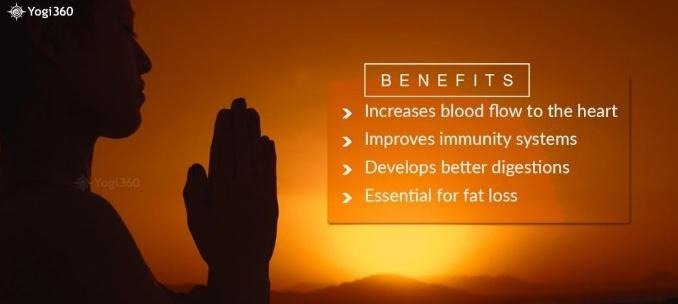
PHYSICAL BENEFITS
- Surya Namaskar helps maintain the heart health. Regular practice can amplify heart rate and bring the entire circulatory system under control.
- This routine can fill your system with fresh surges of oxygenated blood and eliminate toxins.
- It stimulates and balances all the systems of the body
- The Sun Salutation is a very dynamic sequence which helps the body drain the lymph nodes and thereby boosting the immune system.
- Practicing this sequence tones up the internal abdominal organs by alternate stretching-compression cycles that result in better bowel movement and digestion.
- With an improved nervous system and the uniform flow of prana, the body is free from stiffness and stress which allows us to have better sleep.
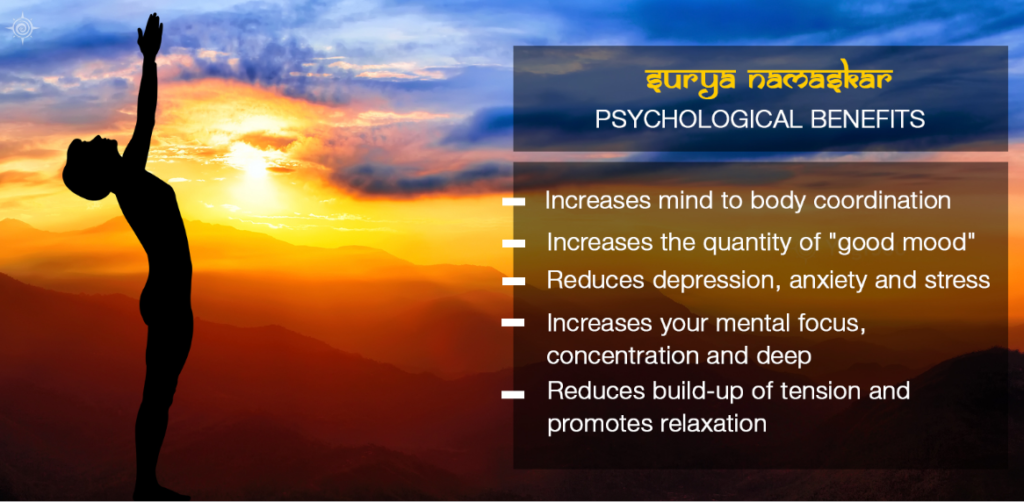
MYSTICAL BENEFITS
- Practicing Sun Salutationhelps us receive energy from the Sun and also certain good qualities like determination, focus, noble and originality.
- Performing this sequence of asana with an open mind and great courage, will help you overcome day-to-day problems and have a regular flow of Positive Energy throughoutthe mind and the body.
- Will keep you away from sins, for it is the proud act of wellness and relief from many diseases.
- Will generate in you good thought, optimistic thoughts; will give a charitable and positive turn to your inherent character and will inspire you with a spirit of self-sacrifice for the good of your community, and your country.
SPIRITUAL BENEFITS
- The spiritual traditions embrace the Sunas a Symbol of Life and Light. Surya Namaskar Historically, cultures all over the world have associated the Sun’s energy with the commanding elements of all forms of life and all the elements of nature.
- Performing Surya Namaskar gives the sense of responsibility towards others and society. It opens up the inherent personality of individuals.
- This sequence helps in working on the heart chakra, solar plexus, sacral chakra, and the root chakra with a powerful connection with air, fire, water and earth elements.
Read More: Yoga and Nervous System Wellness: A Comprehensive Overview
As the practitioner moves through each pose, he/she can feel the impact of the sun on each thing present on this earth. This develops the feel of gratitude towards the sun and all the abundance around them.